
CGI in Java is a significant concept in the development of servers. For a better understanding and comprehension of CGI in Java, one needs to understand the concept of CGI. CGI stands for Common Gateway Interface. It refers to the standard technique by which web servers can communicate and render dynamic content to web pages.
CGI acts as a helper for a website, allowing it to react to user queries by running programs or code on its server. Such programs or codes can be written using Java programming, and this technique of using such codes is generally called CGI in Java.
This blog describes what CGI in Java programming is all about, how CGI functions, what the components of CGI are applications of CGI, benefits & disadvantages of CGI, and its importance even in today’s scenario.
Meaning of CGI in Java
It is the usage of Java Programs for managing web requests, also called CGI or Common Gateway Interface. When a person types data on a webpage and clicks on the submit or some other button, the web server invokes the CGI program written using Java, based on the user’s request, and delivers the result back to the web browser.
The Java program will receive data from the server, will do the necessary task of calculation or database access, and finally will produce output in HTML format. This helps produce dynamic web pages using CGI in Java.
How the CGI in Java Works
To grasp the concept of CGI in Java programming, it is necessary to know the path that this process follows.
First, the request is sent by the user using the web browser, probably through the submission of the form. The web server receives the request and recognizes the need to execute the CGI script. If the script is written in Java, the web server runs the Java script.
The Java program then accepts the input data supplied by the user, performs operations based on the logic encoded within the program, and produces an output result. The final result then gets transmitted back to the web server, where it appears on the user’s browser as a webpage.
Benefits of CGI in Java
A significant strength of CGI in the context of the Java language is that it is a platform-independent technology. This means that the programs written in the Java language are capable of running on various operating systems. Therefore, the use of CGI applications becomes
Secondly, the advantage of simplicity can be realized. CGI in Java is simple for a novice to comprehend since the method is based on the request and response paradigm. In addition, the advantages of Java’s strengths for developing CGI are realized.
Limitations of CGI in Java
In spite of the benefits, there are certain limitations to using CGI in Java. One of the major cons of CGI in Java is performance, in the sense that for every request, a Java program has to be initiated, leading to increased usage of server resources.
Another aspect could be scalability. The CGI system in Java does not support many users simultaneously. This explains why the CGI system in Java has been replaced by far more efficient technologies such as servlets and application servers.
Security and maintenance might also be complex while implementing CGI in Java for large-scale projects.
CGI in Java vs Modern Web Technologies
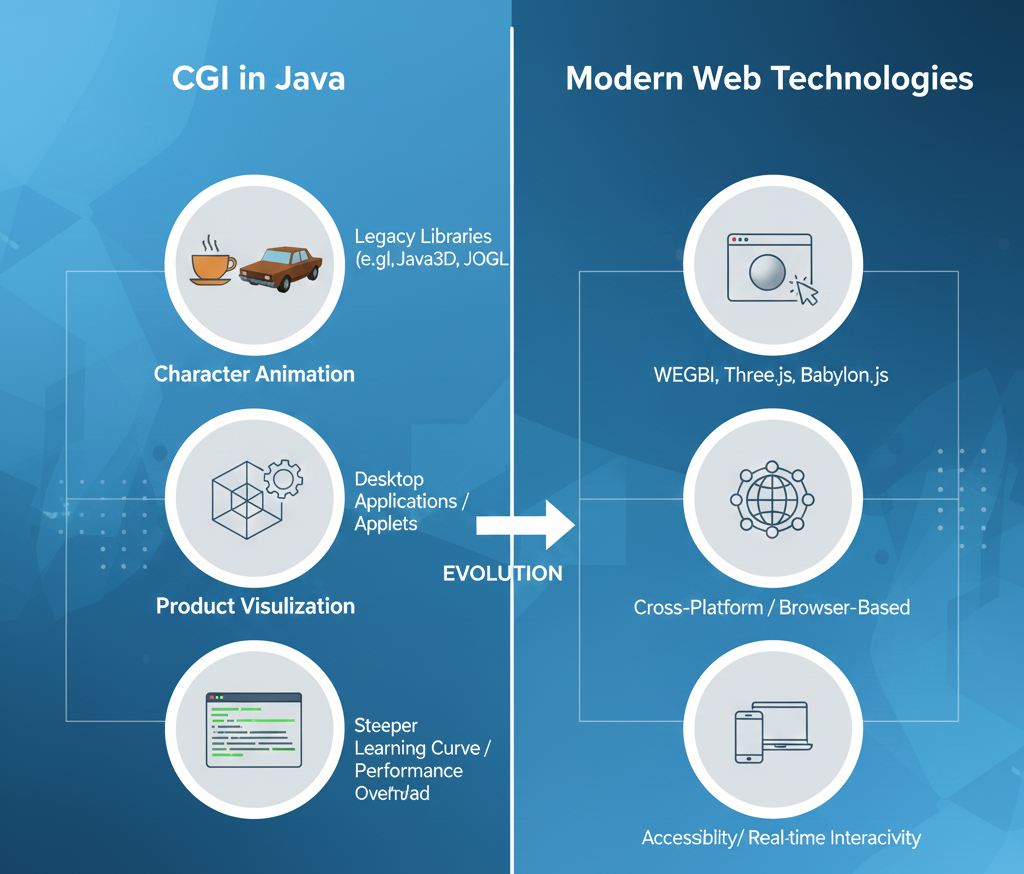
When acquiring knowledge about what CGI in Java means, one should bear in mind a comparison with contemporary Web technologies. In this case, contemporary solutions such as servlets and frameworks should be preferred because they are faster and scalable.
But the emergence of CGI in Java helped to mold the concepts associated with server-side programming. Most of the concepts associated with current technologies have roots in the fundamental concepts of CGI.
Understanding CGI in Java can help students and new developers create a solid base for web development.
Importance of Learning CGI in Java Even Now
Although the use of CGI in Java is no longer applicable in today’s applications, being familiar with the concept is essential in computer science education. The concept of CGI in Java assists students in understanding how servers process requests and how dynamic web pages are created.
Knowing what CGI is in Java makes understanding sophisticated technology easier, because learning about CGI provides a foundation for understanding how data is processed on the server side.
Conclusion
Knowledge of what CGI means in Java programming provides a great understanding of what goes behind the initial development and programming of websites and servers. Even with new advancements, CGI-based systems might be outdated, but they give a great foundational basis nonetheless.
Framexentertainment is a full-service visual production house with specialties in fields such as Ad Films, CGI & VFX Videos, UGC Ads, Music Videos, Fashion & Product Shoots, Corporate Films, Documentaries, and Short Films, and they still incorporate advanced visual technology that portrays the developments of digital innovations.
Frequently Asked Questions (FAQs)
What is CGI in Java?
CGI in Java refers to the ability to use the Java language itself in the form of programs that use the Common Gateway Interface.
Is CGI in Java used currently?
CGI in Java is mostly ancient technology, although it is still taught for educational reasons and knowledge of basic web development.
What was the replacement for CGI in Java?
Technologies like “Java servlets” replaced “CGI” in “Java,” as “Java servlets” are more scalable and efficient than “CGI.”
Is CGI programming using Java difficult to learn?
Technologies like “Java servlets” replaced “CGI” in “Java,” as “Java servlets” are more scalable and efficient than “CGI.”
Why do students need to learn CGI in Java?
Students should be exposed to CGI programming in Java to familiarize them with the basics of web server programming.