
The purpose of the CGI Radiation is therefore purely visual effects, intended to illustrate glowing radiation, beams, waves, or future sources of power on the screen. It is purely digital radiation, which is produced by artists through the use of software. There is no real radiation emitted during the depiction of the CGI radiation in movies or videos.
This blog post will describe what CGI radiation is, how it’s made, where it’s used, myths associated with the process, and why it’s completely safe for all parties involved in the production of movies, television, and other forms of television programming.
Clarifying the Concept of CGI Radiation
A good understanding of CGI radiation requires that the term be differentiated into two separate parts. CGI is short for Computer-Generated Imagery. This refers to images that are created through computer technology rather than using a camera or physical effects. The Radiation in this case refers to images that express energy or light.
Thus, CGI radiation refers to digitally created effects of radiation that appear realistic on the screen. The effect of radiation created using CGI is utilized to demonstrate energy blasters, glowing areas, laser beams, areas of radioactive conditions, and advanced technology. CGI radiation is unmeasurable, non-physical, and non-hazardous because it is only an illusion.
Is CGI Radiation Real?
Among the most frequent questions asked is if the idea of CGI radiation is real. The answer is simple:
CGI radiation is not real radiation. There is no emission of energy, waves, or particles.
Real radiation might involve ultraviolet, X-rays, gamma rays, and electromagnetic waves. As opposed to the latter, the concept of CGI radiation is achieved with animation, lighting, texture, and color grading. Such radiation is purely a visual effect and never affects the real world.
How CGI Radiation Is Created
The CGI radiation effects are created through specialized software and artistic processes. Artists have created glowing objects, energy patterns, and light-simulating artwork to be very realistic for the eye to see.
Ever. metamodel
Lighting is one of the most important aspects of creating radiation effects in CGI. Through lighting manipulation, designers create a convincing effect of radiation. Other manipulations that are done to create realism include motion effects, particle systems, and gradient colors.
Uses of CGI Radiation in Visual Media
CGI Radiation has numerous applications within the entertainment and media sectors. It assists creators in presenting concepts that cannot exist or are harmful to reproduce and re-authenticate in reality.
Movies and Web Series
In films, CGI radiation effects are sometimes employed to demonstrate nuclear reactions, superpower effects, sci-fi weaponry, or space energy fields. Such effects are commonly used to create a dramatic scene.
Advertisements and Brand Videos
In advertising, CGI radiation is employed to portray strength, speed, innovation, and technology. Glowing lines or effects for energy are employed by brands to convey strength and modernity.
Video Games
Video games often employ CGI for modeling guns, shields, health areas, or futuristic landscapes. This increases the level of engagement between players.
Music Videos and Creative Content
Music videos employ the use of CGI for aesthetic purposes. Light beams, waves of energy, and glow effects give the video a cinematic touch.
Common Misconceptions About CGI Radiation
One such myth is that viewing CGI radiation on screen may cause certain health problems. This is completely false. As mentioned above, since it is merely pixels on the screen, it cannot cause any harm to the body.
The next myth is that actual radioactive materials are involved in the production of CGI radiation. The fact is, all of this is done in digital form without any radiation involved.
In addition, there are individuals who think that the CGI radiation effect can influence the device or the environment around the user. In reality, this isn’t true because the effect can merely be found in the file and image displayed.
Is CGI Radiation Safe?
Yes, the radiation from the CGI is completely safe. It does not contain any kind of radiation. The only thing the viewers see is the emission of light from the screens, just like in the case of other images.
Regarding normal screen use, guidelines about limiting screen use and adjusting brightness apply. However, that has to do with screen exposure and not with the radiation emitted by CGI.
Difference Between Real Radiation and CGI Radiation
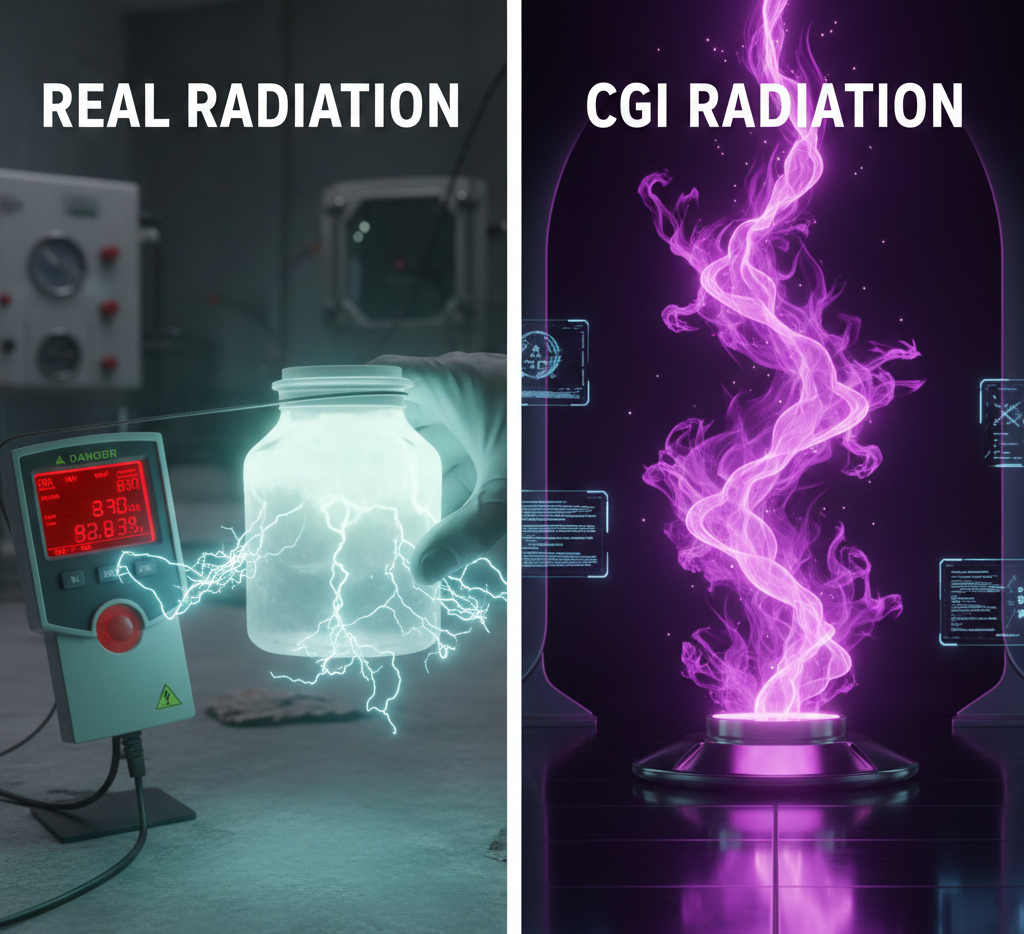
Real-world radiation is physics-based and measurable. Realistic effects can be caused by this kind of radiation. CGI radiation, on the other hand, cannot be measured. It only exists in the visual effects world. It can result in visual effects.
This is significant to know in order for those concerned to avoid misunderstanding entertainment visuals for scientific facts.
Importance of CGI Radiation in Modern Storytelling
The concept of CGI radiation makes it possible for storylines that couldn’t have been considered before. It is used for the depiction of intangible concepts, such as the concept of power or advanced technology in the future. Without the concept of CGI radiation, many storylines in the realms of science fiction and fantasy would not have the same effect.
It also minimizes risks because it does not involve real explosions or dangerous substances. All are virtual and take place in a controlled environment.
Conclusion
CGI radiation is an innovative visual idea utilized in digital media to symbolize energy, power, and future effects. It is not real, does not have negative effects, and is simply computer graphics. It is essential to understand this aspect to remove all misconceptions and myth formations regarding the term.
Framexentertainment is a full-service visual production house with expertise in Ad Films, CGI & VFX Videos, UGC Ads, Music Videos, Fashion & Product Shoots, Corporate Films, Documentaries, and Short Films.
Frequently Asked Questions (FAQs)
What is CGI Radiation?
CGI stands for Computer-Generated Imagery. CGI Radiation differs from Lighting in that it gives a glowing effect that resembles energy or radiation emissions.
Is CGI Radiation Harmful To Humans?
No, because the radiation from CGI is completely safe since it is simply a graphics effect on the screen.
Is CGI radiation used in real science experiments?
No, CGI radiation is only generated in visual content like movies, commercial advertisements, and games and has no real-life applications in scientific research.
Might CGI radiation have any influence on devices or the environment?
No, because it is not physical; it can’t influence anything outside the screen.
Why is CGI Radiation Used Frequently in Movies?
It assists in making scenes more interesting, realistic, and aesthetically striking without resorting to actual hazardous materials.