
CGI Animation has completely changed the way visual content is created today. Be it movies, advertisements, games, or videos on social media, there is CGI animation everywhere. People see amazing visuals on screens, but hardly understand what CGI animation essentially means and how it works.
CGI animation, in simple terms, is images and animations made by computers rather than traditional hand drawing. It lets its creators build some realistic characters, environments, and effects that aren’t achievable if shot in real life. This blog will explain what CGI animation is, how it works, its types, usage, advantages, and also express reasons why it is such an essential part of modern visual storytelling.
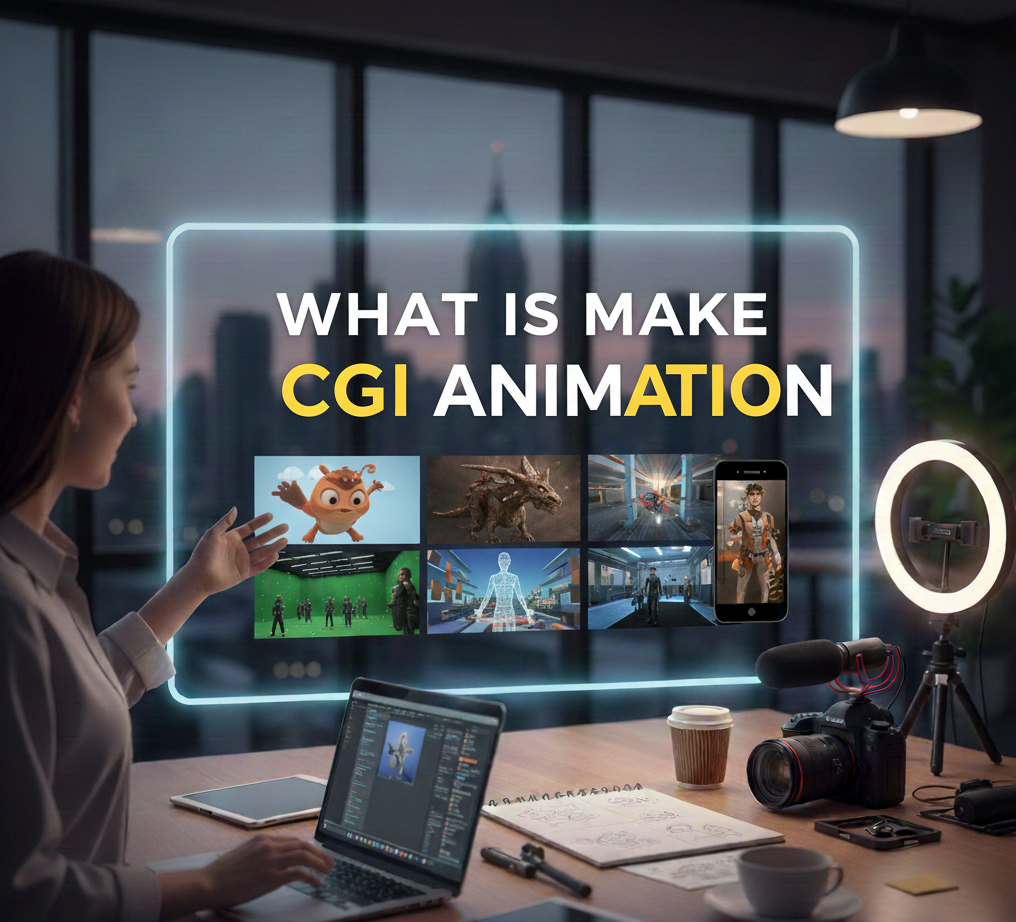
Meaning of CGI Animation
CGI-Computer-Generated Imagery. CGI animation is defined as the process of generating moving images, characters, and scenes using computer software. Unlike traditional animation, where the artists draw every frame by hand, CGI animation uses digital tools to design and animate objects in a virtual environment.
CGI animation can be two-dimensional or three-dimensional. Since it offers more control, flexibility, and realism than any other type of animation, it is being widely used. From simple animated logos to complex movie scenes, today’s visual media has CGI animations everywhere, playing a huge role in this field.
How CGI Animation Works
CGI animation is a multi-step process. First, the artists create a digital model of characters or objects; this is called modeling. After modeling, textures are added to include color, skin, fabric, or surface details.
Next, rigging involves making a digital skeleton so the character or the object will move naturally. In animation, after rigging, movements are set frame by frame through some software. Lighting and rendering are the final steps where realistic light is given to the scene and is converted into final images or videos. This makes CGI animation, with its smooth appearance, look life-like.
Types of CGI Animation
CGI animation, as a category of animation, could also be subdivided with respect to how it is created and used.
2D CGI Animation
2D CGI animation refers to the digital making of flat images. Characters and objects move in two dimensions, meaning height and width. It finds its application in explainer videos, advertising, educational content, and cartoons.
3D CGI Animation
3D CGI animation creates depth along with height and width; visuals seem to be realistic. Characters and objects appear to be very lively, and they can be seen from different angles. Their wide usage ranges from movies, games, product visuals, to architectural designs.
Motion Graphics
The element of motion graphics focuses on the animated text, shapes, and graphic elements. It is also a prevalent form of CGI animation used within advertisements, promotional videos, and even in presentations or social media content.
VFX or Visual Effects
VFX uses CGI animation to add or enhance elements of live-action footage. Most explosions, fantastical creatures, and imaginary environments seen in movies were made using CGI animation and VFX techniques.
Uses of CGI Animation
CGI animation nowadays is being incorporated into many industries. It is used to create scenes in films and television shows that are either too dangerous, too expensive, or impossible to shoot. It also develops animated characters and fantasy worlds.
CGI animation in advertising helps the brand showcase its products innovatively. For every product, shots can be shown from any angle, move smoothly, and be visually appealing. In computer gaming, CGI animation is used to design characters, environments, and the realistic actions of characters.
CGI animations also find wide applications in education, architecture, healthcare, and corporate presentations. It helps explain complex ideas in simple and visual terms.
Advantages of CGI Animation
One of the biggest advantages of CGI animation is creative freedom. Artists can create anything they imagine without physical limitations. It also allows for high-quality visuals that can be easily edited and improved upon.
CGI animation saves money in the long term, especially on projects that require multiple takes. It saves lots of time since scenes aren’t required to be reshot. Yet another advantage is consistency: characters and environments remain identical from scene to scene.
CGI Animation vs Traditional Animation
Traditional animation requires each frame to be hand-drawn, which is a very tedious and labor-intensive activity. In CGI animation, the tools are digital, which speeds up the process and gives more flexibility.
Although traditional animation has a bit of flair to it, CGI animation is favored nowadays since it creates realistic results and can easily be modified. It also allows for complex movements and detailed environments.
Importance of CGI Animation in Modern Media
CGI animation has become an integral part of modern media. Viewers today are demanding better quality visuals and more interactive experiences, both of which CGI animation fully supports.
With digital platforms increasing and social media booming, even short videos, ads, and other online content are using CGI animation. It helps brands communicate better and get noticed.
CGI Animation Future
The future seems bright for CGI animation. Improvements in technology will continue making CGI animation more realistic and easier to access. Artificial intelligence in virtual reality combines with CGI animation in interactive experiences.
With the growth in demand for digital content, CGI animation will no doubt continue to play a major role in entertainment, marketing, and communications for years to come.
Conclusion
CGI animation transformed the way visual stories are told. It offers creativity, flexibility, and realism that traditional methods can’t always achieve. From entertainment to education and advertising, CGI animation continues to shape the form and style of modern media. Framexentertainment is a full-service visual production house specialising in Ad Films, CGI & VFX Videos, UGC Ads, Music Videos, Fashion & Product Shoots, Corporate Films, Documentaries, and Short Films.
Frequently Asked Questions (FAQs)
What is CGI animation?
Computer-generated imagery animation, commonly referred to as CGI, is the art of making moving images and visuals on the computer, but not by drawing.
In which fields is CGI animation normally used?
The use of CGI animation has been applied in movies, advertisements, games, education, corporate videos, and social media content.
Is CGI animation expensive?
The prices depend on complexity, quality, and length. For simple CGI animation, the prices can be fairly low, while for high-level projects, many resources are needed.
What are the required skills for CGI animation?
The skills entailed are creativity, the knowledge of the computer program required for animation, understanding of motion, lighting, and telling a story.
What is the difference between CGI and VFX?
CGI makes digital images and animations, while VFX combines them with real footage to enhance the scenes.